
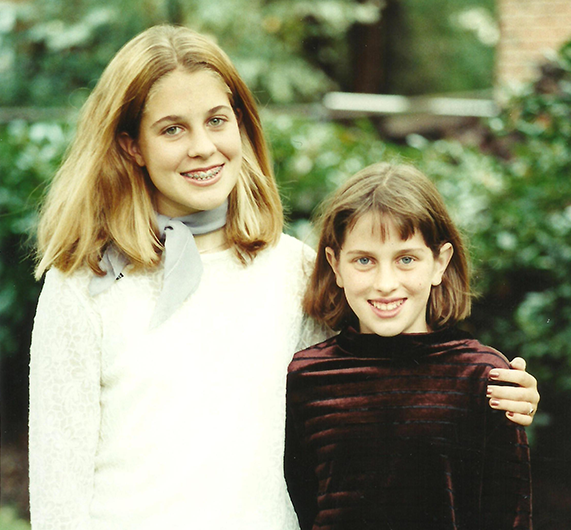
 At 24 years old, our daughter Catherine (Catie) Lake, could no longer speak or walk as result of a rare and progressively degenerative neurological disease called spinocerebellar ataxia type 17 (SCA 17), for which there is no known cure. Until Catie was 20 years old, she was a normal young adult spreading her wings in college with high hopes for the future. Then, as her symptoms began to show themselves, Catie’s and our lives changed forever and started us on the journey that brings us to you.
Spinocerebellar ataxia diseases are marked by a progressive lack of muscle coordination. Victims lose all physical control, have difficulty speaking, and need help performing daily activities. SCA 17 is also characterized by other symptoms, including dementia and a decline in cognition in areas such as memory, attention, language and problem solving, showing symptoms similar to Huntington’s and Parkinson’s diseases. In just four short years Catie progressed from having none of these symptoms to all of them.
 It wasn’t always this way. Catie asked that we share her story with you in the hope that it encourages your support for Dr.Schmahmann’s promising and ground-breaking cerebellum research. Here it goes.
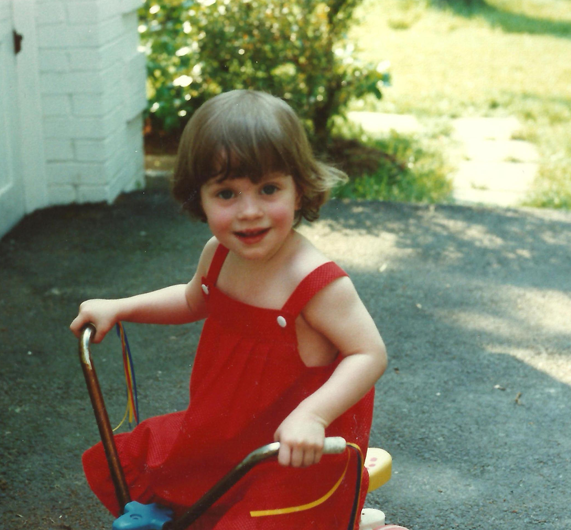
Catie spent the first 5 years of her life happily shadowing her big sister Liz and attending pre-school, where her biggest concerns were who to invite to birthday parties and which “My Little Pony” to buy next.
Catie thrived during elementary school, spending years on soccer teams and in Girl Scouts, the school band, chorus groups, dance classes, school plays and her church’s youth group. Her free time was devoted to neglecting the pets she insisted were critical to her life—her cat, hamsters, rabbits, fish and a rare Russian turtle. Summers were spent fishing with family in Alaska.
 At the same time learning was becoming more difficult. Always an excellent student, Catie now had to work harder than anyone else just to achieve modest results. In what was to become a frustrating pattern, the tests for learning disabilities revealed no issues. The remaining years of elementary school evidenced moments of academic achievement and inexplicably, extreme deficiencies, with more testing and inconclusive results.
Catie was similarly active in middle and high school, even as it became increasingly apparent that something was wrong. She lettered in cross country, was a cheer leader, and had the lead in her high school’s play. She met her first boyfriends and experienced the normal drama of teenage dating.
 With her condition worsening she was again tested for learning disabilities and this time was diagnosed with executive function deficit—the first predictor of SCA 17. We transferred Catie from an elite high school to the Lab School of Washington, a nationally recognized school that tailors its teaching to students with learning disabilities. Catie now knew something was wrong, even if she didn’t know what. Her feelings often came out in her poetry. Catie prophetically wrote:
“I feel trapped in a room without windows.
I am coming up for air but never reach the surface.
I want to shout but nothing seems to come out.
I am as a bird that broke its wing and can’t fly.
I am a soda bottle that has been shaken and can’t get out.
If someone opens the bottle I will be free to speak my mind
and do whatever I please.”
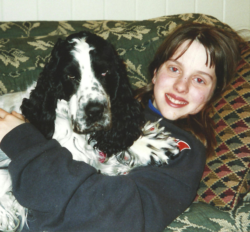 After graduating from the Lab School, Catie was accepted into Landmark College in Vermont, a college for students with learning disabilities that maintains the academic standards of other colleges. Catie enjoyed being away from home and met the love of her life, Brian Booth, who remains devoted to her to this day.
During Catie’s second year of college, she came home with what appeared to be laryngitis. She had difficulty speaking and was walking somewhat awkwardly. Her doctors were puzzled. The decision was made to remove Catie from college and devote our full attention to finding out what was wrong.
It took two years of evaluation by experts, including those working in the rare diseases unit at the National Institute of Health, before Catie’s mystery was solved. The unimaginable had occurred: SCA 17, a rare dominant genetic disorder that has not manifested itself in us or any of our relatives, insinuated itself into our family. There is no known cure.
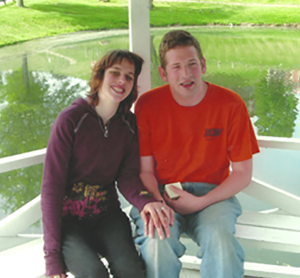 The awkward gait in college was followed in just a year with the need for a walker. One year after that, Catie needed a wheel chair to navigate crowds and long distances. Catie was confined to a wheel chair, no longer able to speak, living at home. She had a care giver with her during week days to feed her and manage the basic functions of life. Once a voracious reader, Catie now had difficulty comprehending written information and was increasingly experiencing upsetting delusions. Among the worst traits of this disease is the inability to predict the speed and scope of its progression. In Catie’s situation, it had been extremely fast.
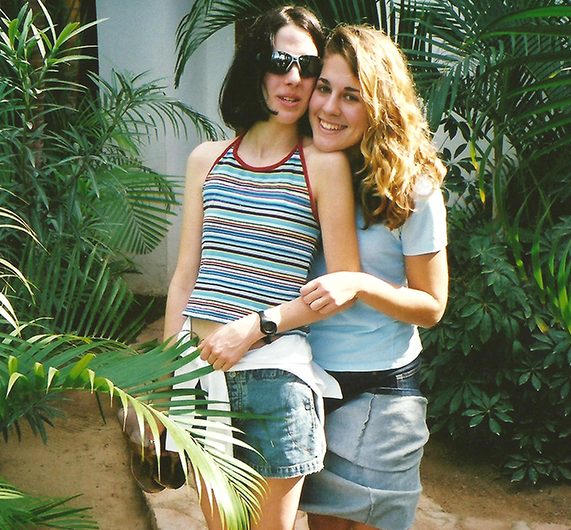 As Catie’s disease sapped her, Catie’s sister, Liz, a gifted artist, discovered a source of solace for Catie – drawing. The logo for the MINDlink Foundation, which remarkably resembles a brain, was drawn by Catie without any idea of its future use.
Through Catie’s adversity we have gotten to know an incredible group of people who have enriched our lives immeasurably. Among the many are Dr. Margaret Timmons, formerly of NIH, whose persistence led to the diagnosis; Dr. Jeremy Schmahmann, Catie’s neurologist, who heads the Laboratory for Neuroanatomy and Cerebellar Neurobiology at Massachusetts General Hospital and who is leading the research effort we are helping fund; and many admirable victims of ataxia and their families through the Chesapeake Chapter of the National Ataxia Foundation.
Tragically, on September 30, 2011, Catie, the inspiration for MindLink Foundation, passed away at her home in Virginia. She was 26 years old. All of those who knew this beautiful young woman with her infectious smile were inspired by her strength, courage, and will to overcome the spinal cerebellar ataxia (SCA 17) that limited her life.
MindLink Foundation was founded and supported by Catie’s family, friends and strangers brought together through this website who were moved by her story and a desire to find a cure for ataxia and related diseases. MindLink is Catie’s legacy. Through it, her life has taken on greater meaning as a vehicle to facilitate medical research that will help others.
To all of those who have contributed to the research efforts of Dr. Schmahmann and his team at Massachusetts General Hospital, we are deeply appreciative. We know that your generosity is making a difference in furthering this important research effort. Catie’s death has renewed our commitment to this important cause.
 Our goal, like many others who have confronted rare diseases for which there are no known cures, is to channel our emotions, energy and resources into achieving something positive out of adversity. Our way is to ask you to join us in contributing whatever resources you can to fund Dr. Schmahmann’s pioneering research on the cerebellum so that Catie and millions like her may have hope.
Thank you.
Share this with someone!